
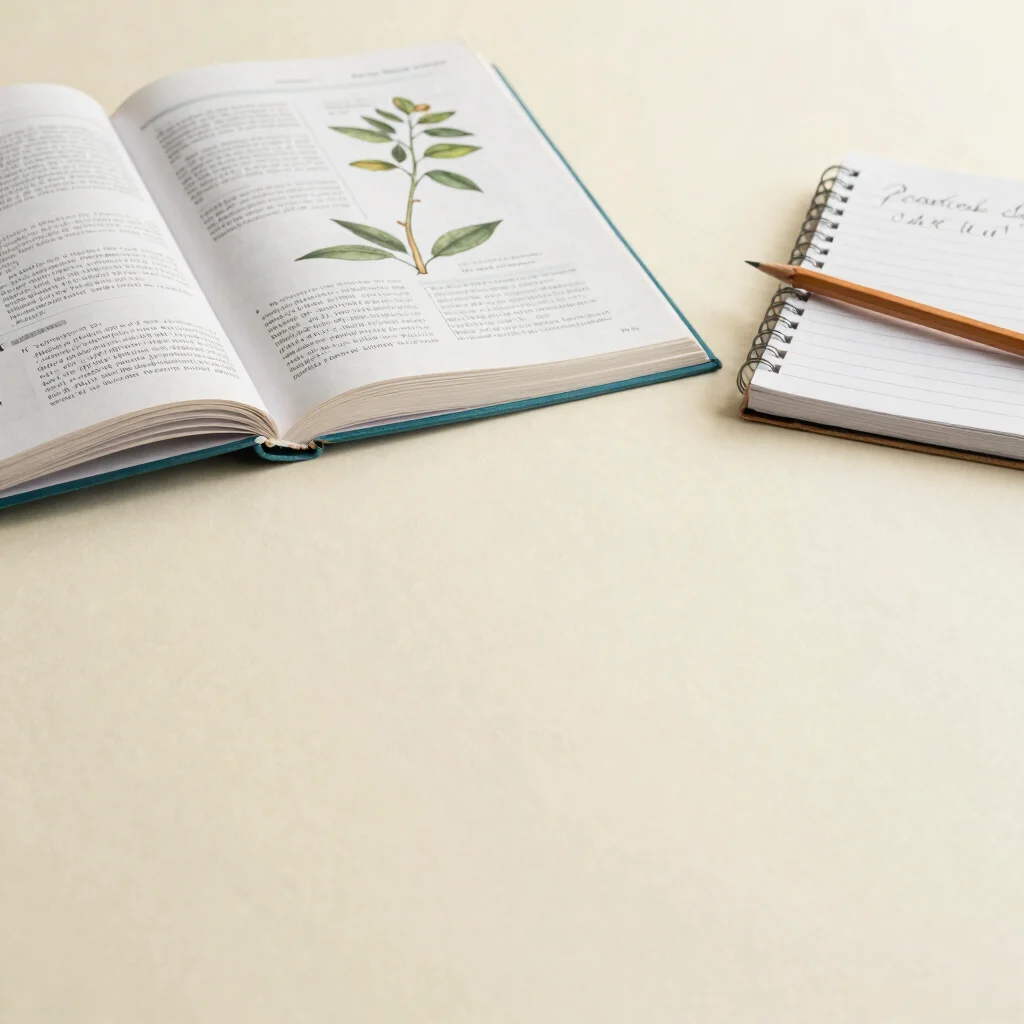
You finish a textbook page, look away, and realize the details have already blurred together. Instead of starting the page over, give yourself a reason to read it: find one main idea and a few details that support it.
Preview the page shape
Before reading closely, notice the heading, any subheadings, and what the page shows in its diagrams or captions. In a science chapter about plant parts, for example, a diagram may label roots, stems, and leaves before the paragraphs explain their roles. This quick preview gives you a map of what to look for.
Read to answer a question
Turn a heading into a question, such as “What does a stem do?” Then read the relevant paragraph to find an answer, rather than highlighting every sentence. If a word is unfamiliar, use the nearby explanation or diagram for clues before checking its meaning.
Close the book briefly
After a section, cover the page and explain the main idea aloud or in a few lines of notes. For the plant example, you might recall that the stem supports the plant and connects its parts. Then reopen the text to correct anything you missed; this works whether you are studying a short passage in an early class or a denser chapter later on.