
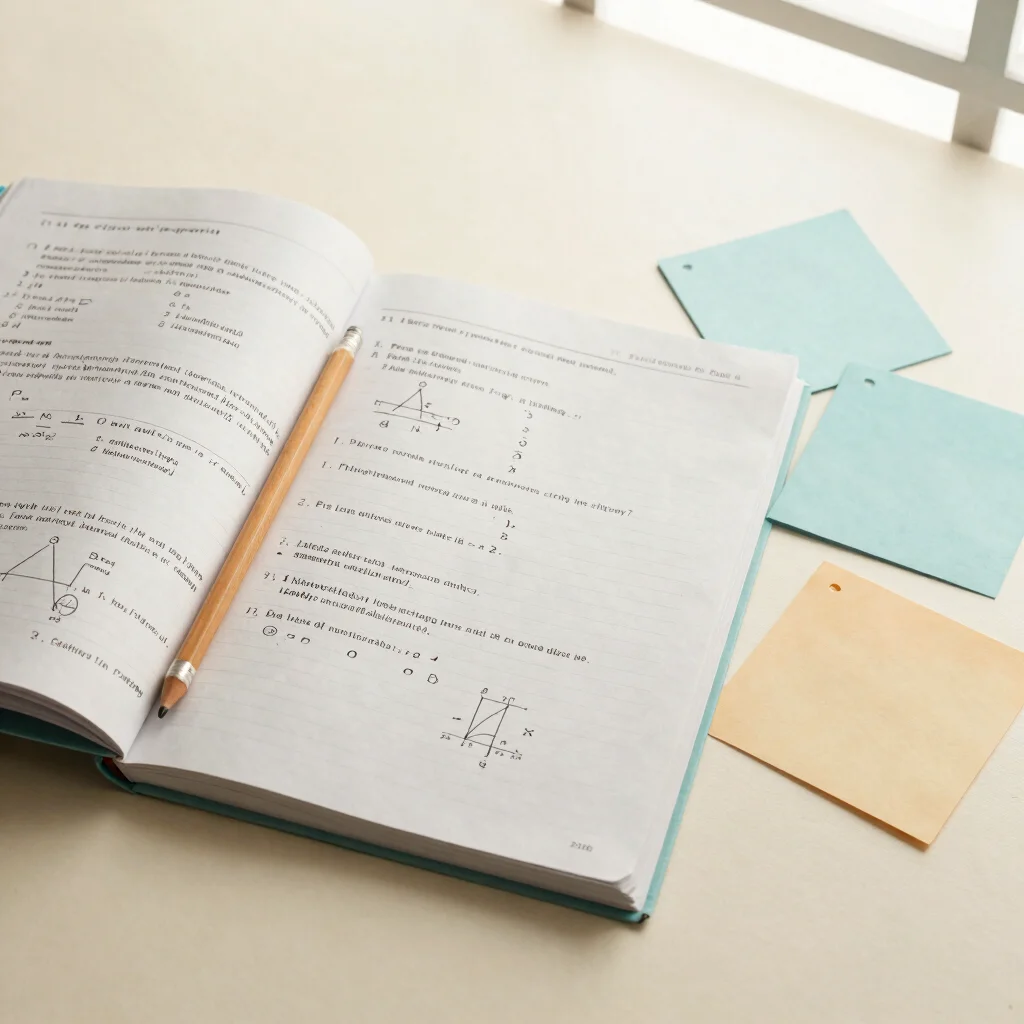
A word problem can feel harder than the math inside it when several numbers and details arrive at once. Before reaching for addition, subtraction, multiplication, or division, pause and work out what the question is asking you to find.
Find the question first
Read the last sentence, then say the task in your own words. If a problem says a teacher has 24 notebooks and packs them equally into bundles of 6, the question is how many bundles there will be. That one sentence gives the numbers a purpose.
Notice how quantities relate
Underline the quantities that matter and describe their relationship: 24 notebooks are being split into equal groups of 6. That points to division, so 24 ÷ 6 = 4 bundles. The word “equally” is a useful clue here, but it is the relationship—not a single keyword—that should guide the operation.
Check what the answer means
Put the result back into the situation: four bundles of six notebooks make 24 notebooks. If the answer had been 30, it would not fit the story. As math topics become more complex across classes 1–10, the same habit still helps: explain what the numbers represent before deciding whether your answer makes sense.